



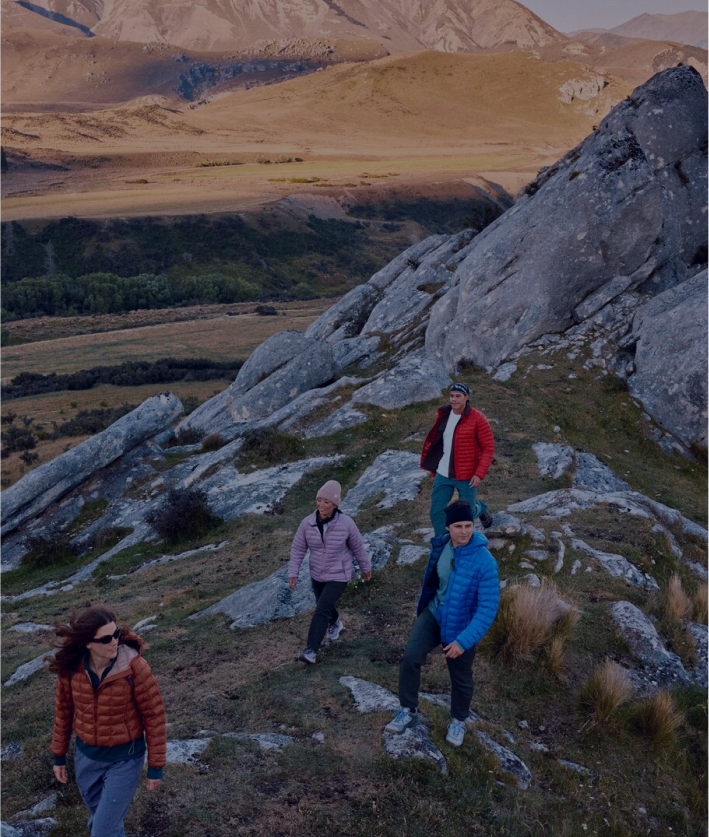
Find your hiking level: choosing the right hiking jacket

Buying a hiking jacket sounds easy enough until you're standing in front of multiple different ranges, with each one promising warmth, weather protection and lightweight performance. Throw in price tags ranging from around $80 to $800, and it's natural to wonder whether the most expensive option is the one you should take home.
For most Australian and New Zealand hikers, the answer is no. There's no prize for buying the most technical hiking jacket on the shelf if your adventures don’t call for it. A weekend walk through the Blue Mountains asks very different things of your gear than a multi-day tramp on the Routeburn Track.
Before you head out to buy new gear, take a moment to work out whether your adventures sit on the hiking spectrum. Throughout this guide, we’ll help you find your hiking level, understand where technical gear starts to make a difference, and choose a hiking jacket from the Kathmandu range that's built for the way you adventure.
The gear spectrum: from city walks to multi-day hikes
Base your gear decisions around how you spend the majority of your time outdoors.
Level 1 – City walks
Your outdoor time is made up of city walks, coastal paths and short, well-formed trails close to home. You're not chasing distance or elevation, just comfort and dependable weather protection so you can enjoy being outside.
Level 2 – Weekend day hikes
You’re spending more weekends on the trail, tackling established walking tracks that keep you outdoors for a few more hours at a time. Lightweight layers and reliable protection become more important as the kilometers add up.
Level 3 – Serious day hikes and overnighters
Longer days, steeper terrain and the occasional overnight trip are becoming part of the plan. Your gear should keep pace with changing conditions while remaining comfortable from the first kilometer to the last.
Level 4 – Multi-day tramping
You’re carrying everything you need for several days on the trail. Pack weight, warmth and reliability all play a larger role here, so making a considered layering approach well worth the investment.

What kind of hiker are you? (be honest)
If you're sitting between two levels, choose the one that reflects most of your adventures rather than the occasional bucket-list trip. That’s how you end up with gear you'll use every time you hit the trail.
How long are your typical hikes?
-
Under 3 hours: Level 1
-
Half day: Level 2
-
Full day: Level 3
-
Multi-day: Level 4
What sorts of terrain do you usually cover?
-
Flat paths: Level 1
-
Moderate hills: Level 2
-
Steep and varied: Level 3
-
Exposed: Level 4
How often do you hike in rain or cold conditions?
-
Rarely: Level 1
-
Sometimes: Level 2
-
Frequently: Level 3
-
Always: Level 4
What do you normally carry?
-
Phone and water: Level 1
-
Daypack: Level 2
-
Full overnight kit: Level 3
-
Multi-day pack: Level 4
Don’t stress about landing on the highest level. Most Aussie and New Zealand hikers naturally fall into levels 2 and 3, which makes everyday and technical hiking gear the best fit for the majority of adventures.
Which hiking jacket suits your adventures?
So, you’ve worked out your hiking level. Now it’s time to choose a hiking jacket that matches it. Each Kathmandu range is designed for a different style of adventure, including everyday walks close to home to multi-day hikes across Australia and New Zealand.
Level 1–2 (everyday to weekend hikes)
For everyday adventures and weekend trails, look for a layering system that covers both ends, a rain jacket to shut out wet weather, and an insulated piece underneath for warmth, comfort and packability. When driving winds, heavy rain and chilly temperatures show up, the Trailhead 3in1 Rain Hooded Jacket is built for exactly that, a fully-taped ngx 2-layer shell keeps rain out while novaLOFT insulation keeps warmth in and it's breathable enough to wear through the hike, not just to and from the car. For milder days or when you just need something in the pack "just in case," the Trailhead 2L novaLOFT Rain Jacket
covers the same waterproof, windproof ground in a lighter package - ngx 2.5-layer fabric, mechanical stretch and articulated sleeves for movement, pit zips for venting, and it packs into its own pocket so it's no burden when the forecast clears.
Level 2–3 (weekend hikes to serious day hikes)
As full-day hikes become part of your routine, you need layers that keep pace with changing effort and conditions. The Men's Ridge Power Stretch Pro Fleece Hooded Jacket is built for exactly that - Polartec® Power Stretch™ Pro fabric gives you warmth, stretch and durability in a midlayer versatile enough to wear on the trail or under a rainjacket in alpine conditions, with a low-friction outer for abrasion and weather resistance and a brushed interior that wicks moisture as it traps heat. For lighter days or extra warmth on demand, the Heli Insulated Jacket packs Thermore® Ecodown insulation into a lightweight synthetic layer, a down alternative that keeps performing in damp conditions and dries quickly, easy to throw in the pack for a day on the trail or around town.
Level 3–4 (serious hikes to multi-day tramping)
When your adventures stretch across several days, every piece of gear needs to earn its place in your pack. The XT range features Kathmandu’s most technically advanced hiking jackets, built for experienced hikers tackling multi-day adventures across Australia and New Zealand. It combines lightweight performance with the comfort and packability longer trips demand.
When to invest in technical gear (and when good enough is good enough)
Just because you know your hiking level now doesn’t mean you need to replace your entire kit overnight. In many cases, the gear you already own is perfectly suited to the adventures you enjoy most. You just need to recognise when your adventures start asking more of your equipment because knowing which upgrades to make will always make the biggest difference.
Signs you need to step up: if your jacket soaks through in light rain, causes you to overheat during climbs or weighs you down, it’s time to level up.
Signs your current gear is fine: if you hike comfortably for your typical trips, your gear dries quickly, and weight is not an issue, your existing gear is good to go.
Planning one bigger adventure?
If you've got a more ambitious hike coming up, focus on upgrading the pieces that matter most for that trip. A new hiking jacket or layering piece often delivers a bigger improvement rather than replacing everything.
Frequently asked questions
Do I need technical gear for the Overland Track?
Yes. The Overland Hike is an ambitious Level 4 hike, so technical hiking gear is a worthwhile investment. Multi-day hikes place greater demands on your clothing than a typical day walk, particularly when you're carrying a full pack through changing conditions. For your comfort and safety, we recommend investing in gear that delivers reliable insulation and weather protection but still minimises weight, like the products in our XT series.
What is the difference between Kathmandu Epiq and XT?
Our Epiq range is suited to versatile everyday wear on day-long walks or warmth during your commute, whereas the XT series is a technically advanced hiking range designed for multi-day trips.
Is expedition gear worth the price for weekend hiking?
For most people, no. Weekend trails and day hikes rarely demand expedition-level equipment, and paying for extra technical features won't necessarily improve your experience. Choosing gear that matches the conditions you hike in most often is usually the better investment.
Can I mix everyday and technical gear in my layering system?
Absolutely. You can prioritise the MVP of your hiking trip – whether that’s a fleece jacket or a rain jacket – and invest in technical gear here, keeping the rest of your kit more affordable.
What single piece of gear should I upgrade first?
Start with the piece of gear that will have the biggest impact on your comfort. For many hikers, that’s a hiking jacket that offers better warmth, weather protection and packability. If you're comfortable in your current jacket, upgrading your base layers to advanced moisture-wicking tops will make a world of difference.
Find your level, find your gear
The best gear is whatever matches your adventures. Not someone else's. And more often than not, it's not one jacket doing all the work, it's a layering system, built up as your trips get longer and the conditions get tougher. For weekend walks, start with Trailhead. As day hikes get more serious, build in a Ridge midlayer. For your multi-day trip on iconic trails, explore our XT Series range.
Related Articles

Pertex Quantum vs Pertex Shield: What's the Difference
Get to know Pertex: The Fabric doing more than you realise You've probably worn Pertex withou...
4 minute read

From design to trail with Gemma McCaw
Gemma McCaw has been part of the XT Series journey from early development through to real use on...
2 minute read

Epiq Limited Down Jacket - Limited Edition Puffer with Purpose
The jacket that started with surplus Surplus from past seasons, sitting with more to give a...
2 minute read

What experts actually look for when testing technical gear
When experienced hikers test gear, they’re not just looking at features. They're asking har...
3 minute read
Pertex Quantum vs Pertex Shield: What's the Difference
Get to know Pertex: The Fabric doing more than you realise You've probably worn Pertex withou...
4 minute read
From design to trail with Gemma McCaw
Gemma McCaw has been part of the XT Series journey from early development through to real use on...
2 minute read
Epiq Limited Down Jacket - Limited Edition Puffer with Purpose
The jacket that started with surplus Surplus from past seasons, sitting with more to give a...
2 minute read
What experts actually look for when testing technical gear
When experienced hikers test gear, they’re not just looking at features. They're asking har...
3 minute read